
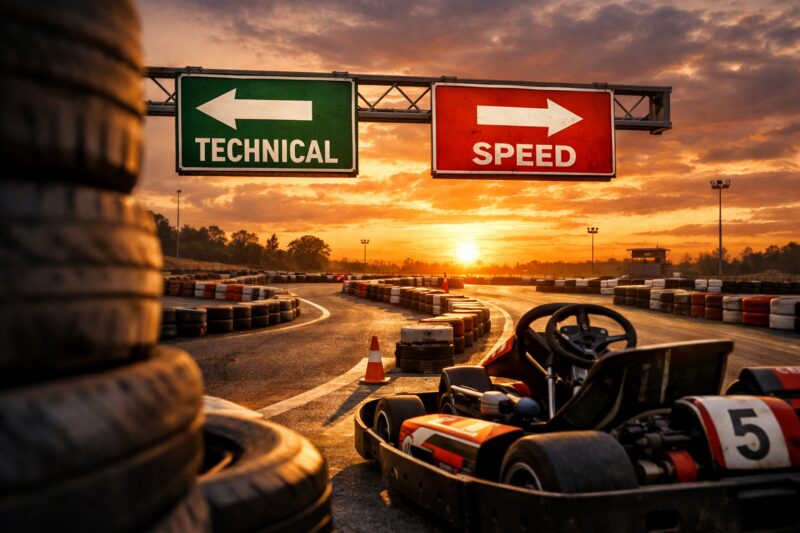
Go Kart Services typically include track layout and setup, installation and safety systems, rental/operational support, and ongoing tuning or maintenance guidance—yet the “right track setup” is what determines safety risk, event flow, and how much money you’ll spend over time. In 2026, buyers are shopping for turnkey clarity (pricing + specs + deliverables) because competition is higher and safety scrutiny is stricter. This guide helps you evaluate Go Kart Services like a procurement decision: what to ask, what to verify before deposit, and how to choose a track configuration that fits your customers, your space, and your revenue goals.
Top 10 questions about Go Kart Services: What’s included in track setup (and what should be guaranteed)?
The best Go Kart Services proposals clearly state what is included in track setup—and what is only “typical.” If you cannot convert the quote into a deliverables list, you are not comparing vendors; you are guessing.
In practice, track setup work breaks into several scope categories. Most reputable providers cover the kart fleet assumptions (or confirm compatibility), the physical track design/layout, installation and assembly, safety systems (barriers, fencing, signage, marshal flow), and operational support (staffing guidance, start/stop procedures, incident response). Many also include maintenance planning and tuning support so lap times and ride quality stay consistent as tires, batteries, and chassis settings age.
What matters for commercial buyers is the line between “deliverables” and “availability.” A deliverables-first contract should specify what will be installed onsite (for example: barrier types and placements, track markings, emergency access routes, and any required staging/queue separation), and what will be provided during operations (for example: baseline tuning specs, inspection checklists, and consumables management). If a vendor says they “can add” items, treat that as a cost and schedule unknown until it is written as a deliverable with measurable acceptance criteria.
To detect scope gaps before you pay, request procurement artifacts—not vague summaries. Ask for the scope of work (SOW), bill of materials (BOM) or spec sheets for safety components, a site plan showing clearances and access paths, and a transport/assembly timeline. Also ask for proof of insurance and any relevant operating procedures the vendor follows during events; this is especially important when comparing providers that claim “turnkey” status but do not specify marshal coverage, inspection cadence, or barrier documentation.
Tradeoffs and limitations come up fast: some vendors price low because they omit long-term maintenance planning, exclude weather contingency, or assume an ideal site surface. For example, a family entertainment center with a durable indoor floor may need different barrier and traction considerations than a temporary outdoor venue with inconsistent ground conditions. If you want to choose a provider confidently, use a “questions to ask before service” approach by testing each proposal with the same evidence checklist, rather than relying on friendly explanations.
Finally, keep it practical. Confirm surface type and finish (as-built measurements, not assumptions), power and lighting needs (especially for indoor tracks), ventilation/airflow constraints for any indoor battery charging area, and weather contingency if outdoor events are part of your business plan. If the vendor’s deliverables do not mention these constraints, they are not truly planning the installation—they are only selling an idea. To broaden your “small engine operations” mindset for service scheduling and maintenance readiness, you can also align with a checklist before you call for technical site and readiness questions that reduce surprises later.
How to choose the right track configuration for your event or business goal
The right track configuration matches your goal to the track’s speed envelope, passing opportunities, and operational throughput. If the layout does not support your event format, you will see longer waits, more incidents, and unhappy customers—regardless of how “fast” the kart can be.
Track setup affects the customer experience in ways that are measurable. A longer circuit with fewer stops can feel like “motorsport,” but it may reduce the number of active drivers per hour if pit/staging and heat scheduling do not support flow. Conversely, a short sprint layout can generate frequent action but might increase lap-time variance if surface grip is inconsistent or if barrier lines allow too much “straight-line braking chaos.” The best vendors map layout parameters to your business objective: entertainment rides, competitive league racing, corporate team building, promotional installs, or educational motorsport programs.
Commercially, the layout should be treated as a system: length and corner count drive tire wear patterns, while width and runoff influence overtaking safety and collision risk. Elevation or grade changes (if included) can add excitement, but they also change braking behavior and tire temperature management, which affects fairness across driver sizes. If you are offering rental karts, your track geometry must work with stability and grip levels intended for mixed drivers; otherwise, you will spend the season constantly “fixing” inconsistent lap times through ad hoc tuning rather than a planned setup.
A deeper selection criterion is capacity and flow. Many buyers focus on “top speed,” but throughput is the real cost driver. Heat scheduling, staging grid design, and how quickly karts can be safely separated from the race line directly impact the number of usable laps per hour. For example, corporate venues often have strict booking blocks; if your layout requires slow pit entry or complicated resets after every incident, your effective customer volume drops—even if the track is thrilling.
When choosing between layouts, consider how you plan to run events. Endurance-style circuits can support longer sessions and smoother driving rhythms, but they require consistent maintenance and tuning to keep fairness. Multi-group configurations can increase active participation, yet they demand clear operational separation and staff coverage so spectators and queues remain safe.
If you want an operational lens on choosing vendors, start your discovery the same way you would when deciding who can reliably support repeat service cycles—use the mindset behind “choose the right auto shop” style vetting: ask for evidence of repeatable setups, documented checks, and a consistent process rather than a one-off build.
Site readiness and logistics: Ensuring your Go Kart Services can actually be installed
You should confirm site readiness before finalizing Go Kart Services, because track setup failures are usually logistics or compliance failures—not design failures. The best proposal includes a clear installation plan tied to your site constraints.
Installation success begins with physical prerequisites. Indoor versus outdoor sites change traction, debris management, lighting/sightlines, and how quickly a surface returns to predictable grip after cleaning or weather. Ground stability and drainage matter because track surfaces and barrier bases behave differently under load; if you plan a track over soft or uneven ground, you risk alignment drift, abnormal tire wear, and increased incident rates.

Equally important are clearances and emergency egress. A track plan should show safe setbacks from walls, doors, and spectator barriers; it should also show how an injured driver can be accessed and how staff can respond without crossing active racing lines. You should verify wind and sun exposure for outdoor tracks, because glare and overheating can affect rider behavior and staff visibility. For indoor venues, ensure your plan respects airflow constraints and safe charging or equipment placement if your setup includes batteries and charging stations.
Permitting and compliance readiness varies by region, but reputable vendors will anticipate safety barriers, crash-worthiness expectations, signage, and operational SOPs. Even when you do not have a local permit in hand yet, the vendor’s deliverable should include documentation that supports your permitting workflow—such as site plans, barrier specifications, and a safety operations narrative. This reduces delays that can kill a commercial launch date.
Logistics also include transport, assembly time, and how the footprint changes for event-day operations. If the track is temporary or modular, you need a weather-proof plan for event operations. If the site has noise or lighting constraints, your track setup must coordinate with those operational limitations so you are not forced to cancel on short notice in 2026.
A common edge case is when site conditions differ from assumptions. For example, a vendor may design for a smooth indoor floor but arrive to find it has patchwork seams or a cleaning residue that changes grip after the first session. Another edge case is insufficient access for maintenance vehicles or spare part deliveries; if staff cannot reach the pit or storage area quickly, downtime becomes a chronic issue. Many guides underplay these realities by focusing on “track length” and ignoring access paths and maintenance reach.
For dual-mode sites—where you run events and also maintain a longer-term setup—it's crucial to discuss with your vendor how they support event-day setup without incurring full teardown costs each time. If your proposal lacks clarity on how the system transitions between modes, including who handles configuration, timing, and inspections, you might end up paying for repeated labor every event cycle. To effectively manage your technical readiness and streamline service schedules, consider applying insights from an organized approach to ATV repairs, which emphasizes identifying issues promptly to avoid repeat failures and choose the right solutions quickly.
Go Kart Services pricing & contract structure: What to compare beyond the sticker cost
In 2026, the cheapest Go Kart Services quote is often the most expensive after the first season. Compare contracts by deliverables, maintenance responsibility, and total cost of ownership (TCO), not only upfront pricing.
Pricing should be broken into components so you can compare apples-to-apples. Look for explicit line items for track build or upgrade, equipment rental versus purchase assumptions, labor/installation scope, ongoing maintenance, consumables, and staffing or operations support. If a vendor bundles costs into one number without specifying what you get, you will struggle to validate performance, schedule, and safety responsibilities later.
To request comparable quotes, force the vendors to align to the same baseline inputs. Ask for the same track dimensions or layout category, the same safety kit scope, the same number of karts, and the same maintenance schedule cadence. If you plan to run heats daily, require the vendor to reflect that operational intensity. Also ask for insurance coverage documentation that matches the work being performed and the risks associated with the venue.
Contract terms matter as much as the build. Scrutinize liability allocations: who is responsible for damage, for safety-related changes, and for incidents. Check cancellation terms and what happens if the site cannot meet assumptions. Make sure service-level response times are explicit if you need repairs during operating hours. Warranty or defects coverage should also be described clearly—what is covered, how long it lasts, and what qualifies as a defect versus normal wear.
For TCO, include consumables and downtime costs, not only the initial installation. Karts consume tires and battery packs (for electric) and require calibration time. Setup choices can increase wear patterns; for example, certain corner radii and surface textures lead to higher lateral load, which accelerates tire wear. Spare part availability affects downtime risk: if a vendor stocks the parts needed for your track and tuning, you reduce operational disruption and can maintain fair lap-time behavior.
A practical “apples-to-apples” framework is to compare vendors using a shared evidence table. Fields should match across vendors: barrier spec documentation, assembly timeline, maintenance responsibilities, inspection cadence, consumables assumptions, and who provides training for staff to operate under SOPs. Many guides mistake marketing claims for comparable spec; reputable providers will provide the underlying engineering and operational details.
If you want a consistent method for assessing service scope and deliverables, treat this like selecting a service partner where questions to ask before service become contract language. You are not only buying installation—you are buying ongoing operational confidence and predictable performance.
Finally, align your quote comparison process to your decision timeline. For example, if you need a launch date for a holiday season in 2026, require a schedule with milestones and acceptance criteria. Then confirm what happens if site readiness is delayed; without a contingency clause, your “cheap install” becomes a costly schedule slip.
Common mistakes and misconceptions when hiring Go Kart Services for track setup
The biggest mistakes in Go Kart Services come from choosing based on hype instead of verifying safety, grip behavior, and throughput. If you fix the process, you avoid paying for layout changes and operational firefighting later.
One common mistake is selecting a track because it looks impressive or because someone claims high top speed, while you never validate grip, safety envelopes, and how karts behave in realistic driving. Top speed alone does not predict incident rate. What matters is braking zones, corner entry/exit geometry, barrier placements, and whether the operational plan keeps karts separated during transitions. A layout that produces thrilling lap times with staff who can run it safely may still be unsuitable if your customer mix and heat schedule create congestion.
Another misconception is that one setup fits all: youth, adult classes, rental stability settings, and league racing each demand different tuning and track characteristics. Rental programs typically require predictable stability and speed management across driver sizes. League racing may prioritize consistency and fairness (reproducible lap times), which means your track surface management and tuning specs must be more disciplined. If you hire a vendor who treats “universal karts” as truly universal, expect inconsistent performance, increased tuning labor, and frequent complaints.
Buyers also sometimes skip verification of safety systems and operating procedures. A track can be built correctly and still be unsafe if staff training, incident response planning, and emergency egress routing are weak. At minimum, require barrier documentation and clarity on marshal procedures, including how staff controls restart/reset after a crash. Many guides miss this because they treat safety as an add-on rather than an operational requirement.
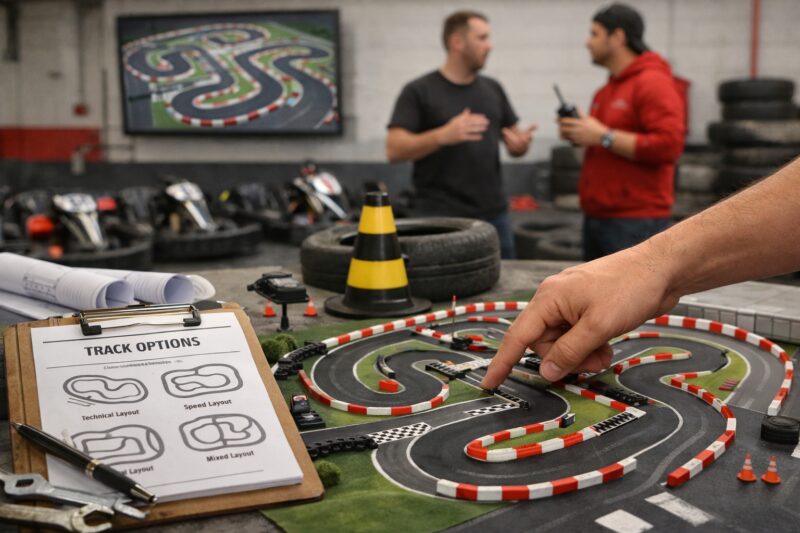
Communication pitfalls are another frequent issue. Vague scope language, missing site measurements, unclear staffing levels, and unclear maintenance responsibilities post-install lead to disputes. If a vendor says they “handle maintenance,” ask what that means: which inspections are performed, how often, what parts are included, and the expected response time during operating hours. If those details are absent, you are likely to inherit a maintenance burden that your team is not prepared for.
Real-world scenario: a venue books weekly events and assumes the vendor’s included tuning covers everything. After month two, the track behaves differently because surface wear and tire wear change grip, but the maintenance plan did not include inspection cadence or spare parts strategy. Lap times diverge across drivers, customers perceive unfairness, and staff time increases. The fix is to lock the operational maintenance schedule into the contract and align it with your event volume.
To avoid that cycle, adopt a scope-first approach—similar to how you would decide who can reliably choose the right auto shop based on process and evidence, not slogans. In practice, your “evidence standard” should include documentation, installation/maintenance milestones, and a clear acceptance process before deposit. Use a repeatable checklist for each vendor so the comparison stays objective.
Track setup options & alternatives: What real buyers can choose instead
Track setup alternatives fall into a few practical categories, and the right one depends on timeline, budget, space flexibility, and how long you expect to operate the track. Your choice changes installation time, upgrade flexibility, and ongoing maintenance complexity.
One category is a turnkey permanent installation. This is typically the right fit for venues with long-term revenue plans, stable indoor/outdoor conditions, and staff who can run consistent operating procedures. The upside is operational stability: you avoid repeated assembly labor, and your tuning and safety baseline can be standardized. The tradeoff is lower flexibility; if your venue footprint changes, upgrades can be disruptive and expensive.
A second category is modular or temporary track build. This can reduce initial cost and allow seasonal use, especially when space is shared with other events. The tradeoff is that modular systems often introduce more setup variance if not handled by trained teams. Consumables may increase if the track requires frequent reconfiguration, and your labor cost can rise if you run frequent pop-up events.
A third category is rental pop-up event packages. This suits short timelines, marketing promotions, and venues that want minimal long-term operational commitments. The tradeoff is you may receive fewer customization options for spectator flow, pit layout, and safety system configuration unless the provider offers scalable modules. You also need to ensure the package’s track configuration matches your driver mix and event format, rather than assuming a standard layout will “just work.”
A fourth category is hybrid setups for seasonal use—often a partially permanent safety infrastructure with modular track elements. This can balance stability with flexibility: you maintain consistent safety systems while adjusting racing lines for different event types. It still requires planning, because upgrades and maintenance must be coordinated across modules so performance remains consistent.
Scalability is the hidden decision driver. A modular approach may reduce initial cost but increase per-event labor and consumable rates. If your business model depends on predictable margins, a permanent or semi-permanent setup can be more cost-effective despite higher upfront spend—especially when you quantify downtime risk and staff training overhead.
To evaluate each category vendor-neutrally, request evidence of prior installs in conditions similar to yours. Ask how they validate barrier and safety placements during installation, and how they document inspection results. This ensures you do not choose a category that looks good on paper but cannot meet your 2026 operational reality.
Advanced considerations: Edge cases, performance tuning, and risk reduction (what most guides miss)
Advanced Go Kart Services planning reduces incidents and lap-time drift by addressing edge cases like traction changes, indoor lighting, and performance fairness across driver sizes. The best vendors treat tuning and maintenance as part of track setup, not as an afterthought.
Start with indoor versus outdoor behavior. Indoor venues often have more consistent weather, but traction can change with floor cleaning chemistry, dust, or moisture trapped under ventilation patterns. Outdoor tracks face debris, dust, and wet-weather variation, plus glare and wind effects that change driver perception and braking. These differences directly affect speed management, cornering rhythm, and incident risk.
Lighting and sightlines also impact safety. If a section of the track is poorly lit or obscured by structural elements, drivers may brake late, collisions increase, and staff response becomes harder. A robust plan includes how the track line supports visible overtaking zones and how spectators are separated from active racing and pit areas.
Performance fairness is another “most guides miss” topic. For rental and mixed driver events, you may need speed caps, stability settings, and consistent baseline tuning so lap times do not balloon with driver height, arm strength, or comfort. Track geometry constraints matter: a layout with frequent tight hairpins might exaggerate steering input differences among smaller drivers, while a smoother flow layout may reduce variance. Vendors who can explain how their tuning aligns with your specific corner types are easier to trust.
Maintenance planning belongs inside track setup. Your proposed barrier and surface selections influence wear patterns and inspection needs. Ask about recommended inspection cadence, spare parts strategy (tires, batteries if electric, fasteners, and critical safety components), and how often they expect to recalibrate. Setup choices that seem minor at build time can cause disproportionate consumables and downtime later.
The safety versus entertainment tradeoff is real. Aggressive layouts can increase incidents if barrier spec, line discipline, or staff coverage is insufficient. Risk reduction is not only about materials; it is also about operational discipline. You should require the vendor to describe SOPs for restarts, incident handling, and how staff maintain separation between racing karts and spectator/pit areas.
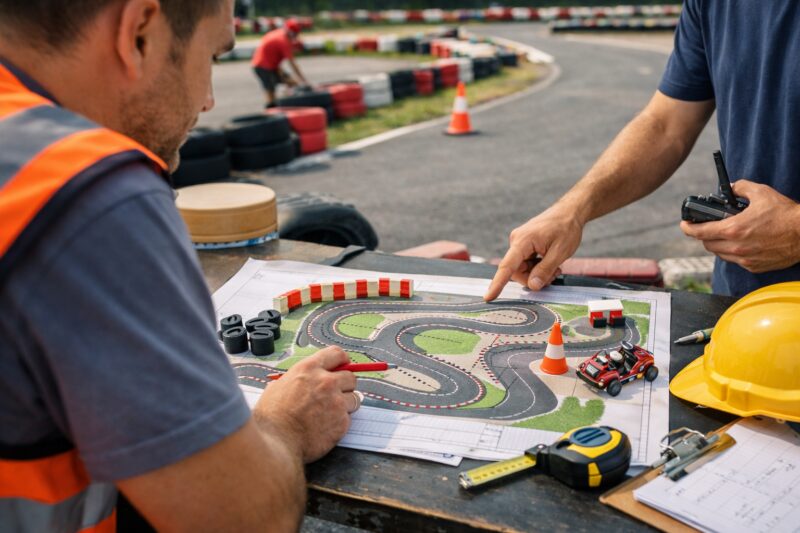
Objection handling is a key buying skill. If a vendor cannot provide barrier documentation, a maintenance schedule, or a clear description of inspection responsibilities, push back before the deposit. Treat missing specifics as a red flag because it often becomes an operational burden later. If you are building a durable operations framework for ongoing service needs, use a service reliability lens similar to faster fixes less downtime by asking how they respond during business hours and what constitutes urgent versus non-urgent repairs.
Geography anchor: Choosing Go Kart Services for your state/region’s requirements
Choose Go Kart Services by confirming local permitting and compliance workflows early, then requiring vendors to provide documentation that fits those requirements. Track safety standards and operational rules can vary enough to affect contract terms.
Even if track design principles are universal, real-world requirements are not. Regions differ in how permitting is handled, what documentation is expected, and which safety sign-off steps are required before opening to the public. For commercial buyers, the practical outcome is the same: the vendor must provide the paperwork and site plans needed for local sign-off, and the contract should reflect compliance milestones so you do not get stuck waiting on unclear documentation.
Regional site realities also influence what you should ask for. In areas with frequent rain or storm exposure, outdoor tracks require weather contingency planning and surface management steps. In regions where indoor venues dominate, you should address ventilation constraints and indoor lighting/sightline requirements. Soil or ground-surface norms also matter because barrier base performance and surface stability can change depending on local conditions.
How you ask locally can be structured. Request proof of prior installs in similar site conditions (indoor floor type, outdoor drainage patterns, or space constraints). Ask for a plan for inspections and sign-off steps: who schedules them, what evidence is provided, and what timeline is realistic. This reduces “surprise delays” that can derail your business launch plan.
State-level rules can affect contract liability, insurance limits, and required staffing/training documentation. That means a vendor’s compliance approach should show consistency: clear operating procedures, documented inspections, and a willingness to provide supporting materials. If a vendor refuses to provide documentation until after deposit, treat that as a major risk because your local workflow will likely require it earlier.
To make this section truly useful, add examples tailored to two buyer types (for the writer to insert into the article): one family entertainment center focused on high throughput and spectator flow, and one corporate or event venue focused on event-day reliability and safety documentation. Those examples help readers map “local requirements” to “vendor evidence” without needing city names.
If your venue also needs help coordinating technical service workflows across systems, you can align your procurement process with the service decision mindset behind choose the right auto shop—namely, verifying process maturity and documented capability rather than relying on generic claims.
Frequently asked questions about Go Kart Services
What’s typically included in go kart services for track setup?
Most Go Kart Services packages include track design/layout support, installation/assembly labor, and safety systems such as fencing, barriers, and signage. Reputable providers also include baseline tuning guidance and a maintenance or inspection plan. Exclusions vary, so request a written deliverables list covering what is guaranteed onsite versus what is “recommended.”
How do I choose the right track length for my event group size?
Track length affects how many usable laps you can run per heat and how quickly karts can circulate without bottlenecks. Use your planned number of karts, heat duration, and expected driver turnover to estimate throughput rather than focusing only on lap speed. A vendor should help you model flow by describing pit/staging design and reset time targets.
What safety requirements should I expect from a reputable go kart services provider?
You should expect documented barrier specifications, an emergency response or incident SOP, and clarity on staff coverage and responsibilities. Many providers also outline inspection cadence and how safety checks happen before opening and between sessions. Ask for proof of insurance and any safety documentation that supports your local compliance workflow.
Can go kart services accommodate both indoor and outdoor tracks?
Yes, but the contract should explicitly address differences in traction, lighting/sightlines, and debris or drainage management. Indoor setups may require different operational procedures for ventilation and charging logistics. Outdoor setups should include weather contingency planning so your event schedule remains reliable.
How much do go kart track setups cost in 2026, and what affects pricing most?
Costs in 2026 vary mainly based on track length/layout complexity, safety system scope, installation labor, and whether the setup is permanent or modular. Ongoing costs also depend on your planned usage intensity, consumables assumptions, and spare parts availability. The most useful comparison is a TCO breakdown aligned to the same deliverables and maintenance cadence.
What questions should I ask about maintenance after the track is installed?
Ask for the inspection schedule, what parts are included in routine service, and who is responsible for corrective maintenance during operations. You should also ask response-time targets and downtime expectations for common issues like tire wear, calibration drift, or barrier inspection needs. Clear answers should be written into the contract.
Do rental kart setups require different track designs than league racing?
Often, yes. Rental programs usually need layouts that support predictable stability and speed management across mixed driver sizes, while league racing may prioritize fairness and consistent performance. Your vendor should explain how the track geometry and tuning plan reduce lap-time variance and improve driver consistency.
How do I verify a vendor’s track design and safety documentation before paying a deposit?
Require spec sheets for safety components, a site plan showing clearances and emergency access, and proof of insurance that matches the work being performed. Confirm the acceptance/sign-off steps and ask how the vendor handles inspections. If documentation is vague or delayed, ask why before you commit funds.
Is a modular go kart track setup a good option for seasonal use?
It can be, especially when you need flexibility for shared spaces or shorter operating seasons. However, modular setups often shift costs to per-event labor and consumables if reconfiguration happens frequently. A modular proposal should include a realistic schedule for setup/tear-down and an operational plan that maintains safety and consistent performance.
What should be considered for spectator flow and pit/staging layout?
Spectator flow affects perceived safety, customer comfort, and how quickly staff can manage karts during transitions. The pit/staging layout should keep drivers separated from the race line, provide safe queue spacing, and allow fast resets without crossing active racing areas. Your vendor should provide a clear operational map and explain how staff control movement day-of.
How do I prevent downtime or performance issues with battery and tire wear?
Prevent downtime by aligning tuning and maintenance plans to your exact layout, event frequency, and driver mix. Ask for an inspection cadence, spare parts strategy, and consumables management approach that matches your usage intensity. Vendors should be able to explain how they monitor wear patterns and adjust settings so performance stays consistent.
Conclusion: How to choose Go Kart Services with proof over promises
To choose Go Kart Services confidently, define your goal, confirm site readiness, match track parameters to your event format, and compare contracts using measurable deliverables—not marketing claims.
The decision path should look like this: first, clarify what you’re building (rental entertainment, team events, league racing, or educational programs). Next, validate whether the site can support your track safely with clearances, access paths, surface expectations, and contingency planning. Then select a layout by mapping speed and corner rhythm to throughput and fairness, not only to “top speed.”
After that, compare contracts beyond the sticker price. Build a shared apples-to-apples checklist for barriers and safety documentation, installation scope, maintenance cadence, response times, warranty coverage, and spare parts assumptions. This is how you avoid common failures like missing safety deliverables, vague maintenance responsibilities, or operational assumptions that never make it into the contract.
Finally, insist on proof. Require a documentation package that includes spec sheets, a site plan, insurance proof, and an inspection/sign-off plan appropriate to your region. Then confirm long-term fit: ongoing maintenance responsibility, upgrade capability, and staffing or SOP support when the season is at full volume in 2026.
Next step CTA: request 2–3 comparable quotes using the same checklist, then schedule a site review (or on-site planning consult) to validate measurements, logistics, and deliverables. Treat measurable scope and safety documentation as the deciding factor, because those are the inputs that determine both customer experience and risk.
Updated May 2026