
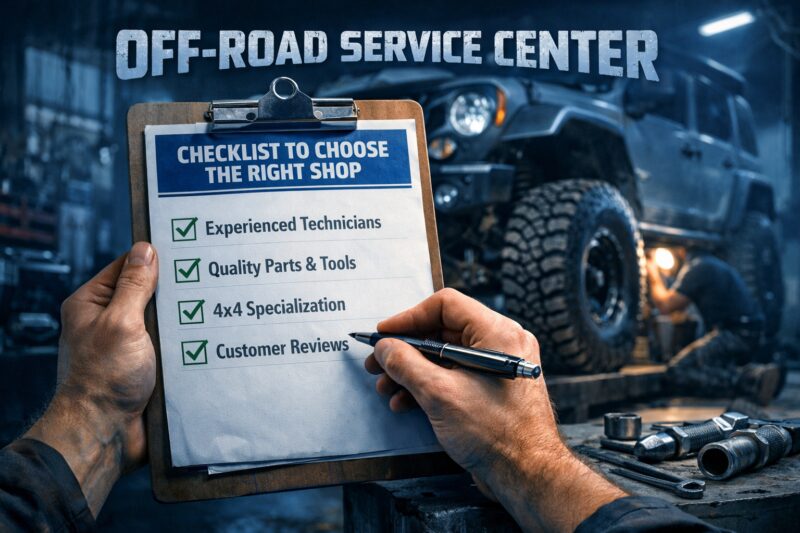
An Off-Road Service Center should do more than “fix the symptom”—it must confirm root causes using drivetrain/suspension-specific diagnostics, proper torque and alignment methods, and off-road-aware sealing and parts sourcing so performance, safety, and resale value don’t get compromised. Choosing an Off-Road Service Center also protects your wallet: it reduces repeat failures, missed damage, and delays caused by mismatched parts or workmanship. Below is a commercial decision checklist and step-by-step buying path you can use before paying—relevant for 2026 because tooling, diagnostics, and parts sourcing practices continue to evolve. Use this guide to verify capability, require evidence-based diagnosis, and confirm documentation and warranty details before work starts. If you want the fastest path to the right outcome, use the same disciplined “intake to invoice” approach you’d expect from high-stakes safety repairs.
What should an Off-Road Service Center do differently than a regular shop?
An Off-Road Service Center should treat every job like an off-road reliability and safety project, not a generic maintenance visit. That means confirming root causes with appropriate measurements, using correct installation processes, and validating systems that off-road stress exposes—like driveline angles, brake hardware, cooling, sealing, and electrical performance in dirty, wet, and vibration-heavy conditions. A regular shop may be capable at basic service, but it can miss failure mechanisms unique to lifted rigs, differentials under load, or water/dust contamination that off-road environments accelerate.
Why this matters commercially is simple: the cost of a wrong repair usually arrives twice. First, you pay for labor and parts that don’t address the real issue (or only partially do). Second, the same symptoms reappear—often after the first off-road outing—because the shop’s diagnostic process didn’t verify the underlying condition (for example, bearing preload, seal seating method, alignment geometry, or leak path tracing). An off-road specialized center reduces these “comeback” loops by using a procedure-driven workflow that ties diagnosis results to the repair plan.
In practice, a strong shop runs an evidence-first process: intake and walkaround documentation, a diagnosis plan that states what tests they’ll run and what would change the next step, and transparent estimates that separate known components from “risk” items (like rusted fasteners or hidden damage). Tradeoffs exist: thorough diagnostics take more time than flat-rate guess-and-replace. However, for commercial-grade outcomes—fewer repeat visits, fewer delays, and better resale stability—the added upfront effort is usually cheaper than repeated fixes.
Common mistake: assuming “a 4×4 shop” will automatically match your vehicle architecture. If your truck uses a different drivetrain layout (IFS vs. solid axle, live axle vs. independent suspension, diesel vs. gas, AWD transfer-case style, or specific axle/locker system), the shop must demonstrate relevant experience and the right tooling. If you’re building a relationship with the right place to reduce repeat failures, use proven guidance like choose the right mechanic quickly to structure your selection and intake process.
For deeper context on why safety and proper procedures matter after repair, the National Highway Traffic Safety Administration (NHTSA) site is a useful reference for understanding how vehicle systems and maintenance safety intersect. Also, for recall/inspection awareness that can affect drivetrain and electrical systems, reviewing manufacturer recall and safety information helps you avoid hidden issues when you plan a repair timeline.
Build a decision checklist for an Off-Road Service Center
Use a structured checklist to decide whether an Off-Road Service Center is ready to handle your specific outcome—reliability, drivetrain health, brakes/tires/wheel safety, electrical troubleshooting, or suspension performance. The best centers start by clarifying what “fixed” means in your case, then they propose a diagnosis plan and document evidence before they authorize the repair. If a shop jumps straight to parts suggestions without validating the problem, you’re likely paying for uncertainty rather than solving root cause.
Step-by-step, your path should look like this: first, define your desired outcomes (what symptoms you’re seeing and what “success” would feel like). Next, ask for a shop-verification flow: an initial call and intake, an in-bay walkaround with photos/notes, and a diagnosis plan that states what tests they run first and what data they will collect. Then they should provide an estimate that separates labor steps from parts, and it should include consumables and realistic risk allowances for off-road damage (corroded fasteners, damaged housings, or seized hardware). Finally, before/after documentation should include scan reports, measurements, and photos—so you can trust what changed and explain it later for resale.

Evidence-based vetting criteria should be explicit. Ask for proof of capability: special tools they use (presses, torque wrenches verified to spec, alignment systems that can handle lifted geometries, leak detection methods), brand/model experience, and warranty terms that cover both labor and installed parts. Watch for how they answer tradeoffs: speed versus thoroughness is normal, but flat shortcuts are not. For example, a shop can be fast on common maintenance, yet for vibration, driveline noise, or ABS/traction-control faults, they should show diagnostic depth instead of “replace until it stops.”
Deeper-than-obvious test for “true diagnosis” versus guess-and-replace: ask what data they collect first and how that data changes the repair direction. Codes alone are not diagnosis. For driveline issues, a good shop verifies measurements and conditions—like play checks, leak tracing, seal installation verification, bearing preload checks where applicable, and load-related testing when needed. For steering and suspension, they measure clearances, inspect bushing condition, and confirm alignment parameters (including caster/camber changes) rather than only reinstalling parts. That approach supports off-road vehicle job success by preventing comebacks caused by a repair that treated a symptom.
If you want to move quickly, you can also apply a repeatable selection framework using questions before off-road service. A disciplined intake conversation helps you spot whether the shop is evidence-first or parts-first.
Verify off-road capability: equipment, skills, and coverage fit
Before you book, verify that the Off-Road Service Center covers your systems with the right tools and the right process—because off-road work is less about “can they bolt parts on” and more about “can they measure, install, and validate under harsh conditions.” Off-road wear differs from street wear due to water ingress, dust abrasion, shock valving changes, and driveline angle stress. A center that adapts procedures to these realities protects reliability and reduces the chance that a repaired component fails again after the first trail cycle.
Start with coverage fit. Your checklist should include drivetrain items like transfer case, differentials, axle shafts, seals, and related hardware; suspension and steering components like ball joints, control arms, bushings, tie rods, and shocks; braking hardware such as calipers, rotors, lines, ABS sensors, and wheel bearing assemblies; cooling and airflow like radiators, intercoolers, and fans; and electrical/lighting systems including alternators, wiring harness protection, grounds, and lighting aimed for use. If you do recovery or winching, confirm experience with winch installation or repair, fairleads/rollers, wiring protection, and grounding to prevent heat damage and intermittent faults.
Then verify equipment and process markers. A capable shop can handle lifted rigs: it has lift capacity, appropriate press and suspension tools, and torque verification habits that don’t rely on guesswork. Alignment should be a real capability, not an afterthought—especially for rigs that have changed caster, camber, toe, and driveline geometry. Ask how they verify torque on critical fasteners (like axle hardware or steering components) and whether they can correct alignment for the new setup.
Technician skill signals matter. Look for training/certifications relevant to diagnostics, experience with similar architectures (independent suspension vs. solid axle, specific transfer cases, common diesel systems), and—most importantly—clear explanations of failure mechanisms. For example, a good technician can explain why a seal leaks after off-road water cycles (venting path, seal lip orientation, surface finish, or installation method) and how they will prevent recurrence.
Finally, confirm parts sourcing realism. OEM parts can be preferable for critical sealing surfaces and fitment consistency, while performance/off-road suppliers may be better for shock and wear components depending on your goals. Custom fabrication is where many general shops become risky: if fabrication is necessary (brackets, custom lines, corrected mounting points), ask how they measure tolerances, verify fit, and handle warranty for fabricated parts. This is where many centers earn trust—and where you can compare workflows by reading more about related service categories like influencer marketing for SEO-style clarity applied to local repair research (i.e., use structured evidence rather than ads and opinions).
As an external reference for how vehicle systems and maintenance intersect with safety recall awareness, the Federal Motor Vehicle Safety Standards (FMVSS) overview from NHTSA helps ground why braking, steering, and related components are high-safety areas. For wiring and diagnostic best practices, OEM diagnostic literature and manufacturer service guidance also matter, but those are often vehicle-specific—so a shop’s ability to follow factory procedures is one of your strongest indicators.
Evaluate diagnostics and estimates before you authorize work
Don’t authorize repairs until the Off-Road Service Center explains how they’ll diagnose the problem and how they’ll price the work. A diagnosis plan should include the first tests they run, why those tests are relevant, and what outcomes would change the repair path. If they can’t articulate the “what we’ll check first and why” portion, you’re more likely to pay for trial-and-error rather than evidence-based root cause diagnosis.
Estimate transparency is part of diagnosis. A high-quality quote should itemize labor steps, list part numbers (or at least exact part identifiers), include consumables, and explain risks and assumptions specific to off-road hardware. Off-road vehicles often have seized fasteners, corroded mounting points, and weather-exposed seals—so a shop must state what they might need to address during disassembly. Tradeoff: estimates can take longer when the shop insists on thorough inspection; however, the quality difference is that you avoid surprise change orders and you understand why certain decisions are necessary.
Change-order rules should be explicit. A professional center stops and calls you when additional damage appears (rusted fasteners requiring thread repair, stripped threads, bent components, or hidden impact damage). They re-quote with clear justification instead of quietly substituting parts or adding labor. Before-and-after evidence should include photos, measurements, retained scan reports, and torque verification where appropriate. If they retain old parts when reasonable, it provides a material proof point you can use to understand what was replaced and why.
Deeper-than-obvious “redo prevention” strategy: ask how they prevent comebacks caused by misdiagnosis. For example, if the issue is wheel bearing failure, they should discuss bearing preload/seat condition and the correct seal installation process, not just “installed new bearings.” If it’s a lift-related vibration, they should confirm alignment angles, verify driveline angle corrections, check for bent components, and validate brake line routing or wheel balance if relevant. That is how the shop’s process supports off-road vehicle job success instead of repeating the same cycle every season.
If you want to verify the center’s overall approach before you commit, incorporate the selection guidance from off-road-repair-shop by comparing intake questions, not just the final number. Even if you don’t share your quote line-by-line, you should be able to see whether the shop’s diagnostic logic matches your symptoms and use case.

Common mistakes and misconceptions when choosing an Off-Road Service Center
The most expensive mistakes in choosing an Off-Road Service Center usually come from false assumptions: that low price equals good value, that any “4×4 shop” can handle your platform, or that warranties automatically cover workmanship issues. Off-road failures often recur when the root cause was missed—especially when diagnosis relied on codes alone or replaced parts without verifying measurements. If you ignore how the shop thinks, you can end up paying for repeat labor and delays that derail your planned riding, towing, or seasonal travel.
Mistake #1 is choosing purely on price or speed. Many shops can perform common maintenance quickly, but off-road drivetrain and suspension issues require careful measurement and inspection. If the shop skips leak tracing, driveline angle verification, or alignment validation, the repair may “feel better” briefly before the underlying condition reasserts itself. Commercially, that turns your spend into a repeating subscription rather than a one-time fix.
Mistake #2 is assuming any “4×4 shop” can handle your specific system. Diesel and gas systems differ; IFS and solid axle setups differ; independent suspension behaves differently under articulation than live axle layouts. A center should demonstrate experience with similar architectures and explain failure mechanisms clearly. Mistake #3 is ignoring warranty/return policies for labor and parts. Coverage matters because it determines what happens if the shop’s repair doesn’t hold—especially when contamination, vibration, or installation errors contribute to premature failure.
Mistake #4 is failing to communicate how the vehicle is used. Mud/water crossings, rock crawling impacts, desert heat, towing frequency, and winter salt all change failure patterns and diagnostic priorities. Ask yourself what a good shop would do with that information—then look for whether they ask you the same questions up front. Deeper-than-obvious: the “diagnostic codes trap.” A scan report may show a fault, but codes can be downstream of mechanical issues. For example, a traction fault might be triggered by sensor readings affected by wheel bearing play, a suspension geometry change, or a wiring harness exposed to mud. A responsible shop inspects physical conditions first, then reconciles them with scan data.
Related decision-making content can help you avoid these traps. For instance, if you’re researching broader repair selection, exploring repair workflow expectations via offroad-repair concepts can help you develop your own “what to ask” script and avoid being sold a generic package that doesn’t fit your use profile.
Compare your options: what you can choose besides one generic shop
You are not limited to one generic repair shop when choosing an Off-Road Service Center path. Depending on the vehicle issue, you can choose between specialized centers, dealerships, mobile services, or even builder-style fabrication workshops. The key is matching the shop type to the work type so you get proper diagnostics, correct installation, and warranty-backed results without unnecessary handoffs or mismatched specs.
Option category 1 is a specialized off-road service center versus a general automotive shop. Specialized centers typically excel in lifted alignment workflows, off-road sealing practices, and drivetrain/suspension diagnosis that accounts for water, dust, and articulation stress. General shops may be fine for basic maintenance but can struggle with edge cases like custom lift geometry correction or driveline angle vibration after component changes. Option category 2 is dealership service. Dealerships can be excellent for OEM diagnostics, recall completion, and factory warranty alignment—but they may be less tailored to performance/off-road supplier workflows once you’ve modified the vehicle.
Option category 3 is mobile/off-site service for specific tasks. Mobile mechanics can be useful for inspections, basic maintenance, and certain diagnostic checks, especially when you have equipment and safety controls in place. However, suspension work, drivetrain disassembly, pressing, and alignment validation usually require a full bay and specialized tooling. Option category 4 is builder-style fabrication workshops. Fabrication becomes necessary when mounting points, brackets, lines, or reinforced components require custom engineering. The limitation is that fabrication work must still be tied to correct diagnostics and final validation; otherwise, you risk “built it but didn’t cure the cause.”
Deeper-than-obvious: use a hybrid workflow when it helps. For example, schedule diagnosis at one shop, then coordinate parts sourcing and installation at another to match your budget and warranty needs. The coordination checklist should prevent mismatched specs: confirm part numbers, torque specs, and alignment targets; ensure the receiving shop documents installation and retains evidence; and clarify who owns warranties for each stage. If you’re trying to reduce delays and mismatch risk, a planning-oriented approach like off-road vehicle job success can guide how you structure responsibilities across shops.
To ground your expectations for warranty and factory procedures, consult official recall and safety information through NHTSA’s recalls page. For anything OEM-specific, manufacturer service guidance is the gold standard—but a high-quality off-road shop should be willing to follow OEM specs where they matter.
Advanced considerations: edge cases that separate great Off-Road Service Centers from average ones
Edge cases expose whether an Off-Road Service Center is truly built for off-road realities. Great shops handle complexity without cutting corners: they account for lift/fitment geometry, corrosion control in water and mud cycles, towing and high-load stress, and parts compatibility tolerances that determine whether a repair holds. Average shops might “complete the job,” but they may not validate that the system will remain safe and reliable in the conditions you actually drive.
Lift/fitment complexity is one major divider. A serious off-road shop considers how alignment angles and driveline angles change with suspension geometry and how those changes affect vibrations and steering feel. They also think about brake line routing, emergency steering geometry, and how tires interact with wheel well clearance. If the vehicle has been lifted, ask whether they can perform alignment targets appropriate to your setup and confirm the return to safe handling before you leave.
Water/mud and corrosion scenarios are another differentiator. A capable center uses a seal replacement strategy that considers venting, surface prep, contamination control, and correct hardware choices (like corrosion-resistant fasteners where appropriate). They should explain cleaning protocols and how they prevent repeat contamination, such as ensuring vents aren’t blocked or reinstalled improperly and verifying mating surfaces after disassembly.
High-load and towing require a different diagnostic mindset. The shop should diagnose overheating risks, transmission/transfer-case stress, and braking endurance, and it may recommend cooler upgrades or validation on your typical towing cycle. Parts compatibility and tolerances matter as well: verify axle seals, bearing kits, bushing type, clutch pack details where applicable, and correct torque specs for critical components. The deeper-than-obvious principle is staged repair logic: fix safety items first, test, then proceed to performance upgrades to avoid masking the real cause.

A good way to tell whether a shop is in the “great” category is to see how they talk about your failure mechanism, not just your symptom. If they can explain why off-road use creates repeat failure pathways and propose a staged, evidence-based plan, you’re dealing with a center designed for real off-road vehicle behavior. This also aligns with commercial thinking: reducing comebacks is usually more valuable than chasing the cheapest parts.
National fit: how to choose an Off-Road Service Center when you’re not local
Choosing an Off-Road Service Center remotely can work well in 2026 if you use a structured intake process, clear documentation requirements, and consistent communication expectations. When you can’t visit multiple shops, your goal is to reduce uncertainty: confirm capability fit, require evidence from the inspection stage, and ensure the shop’s warranty and parts sourcing policies are written and specific. A remote workflow should feel deliberate, not improvisational.
Start with an evaluation path: ask for a remote intake checklist that includes your vehicle details (year, make, model, drivetrain type, lift/suspension setup, tire and wheel specs, and recovery hardware), your symptoms, and your use case (mud/water frequency, towing, desert conditions, winter salt exposure). Provide photo/video submissions that show the symptoms at rest and in motion if possible. Then request documented estimates with a diagnosis plan: what they will inspect first, which tests they’ll run, and what data they will provide before authorization.
Shipping/towing considerations should be part of the initial conversation. Ask how they coordinate transport, their labor rate structure, and whether they inspect upon arrival to confirm nothing changed during shipping. Consistency assurance comes from requiring torque verification methods, scan reports, alignment measurements for lifted vehicles, and communication SLAs (for example, “you’ll get an update within X business days”). For parts delivery timelines, clarify their backorder strategy: what happens if a part is delayed, whether they suggest alternates, and how substitutions are documented to protect fitment.
Deeper-than-obvious: discontinued parts can derail remote installs. Ask what replacement strategy they propose if a component is unavailable—cross-reference verification, measuring mating surfaces, confirming part dimensions and tolerance stack-up, and ensuring the replacement won’t create a mismatch in seals, bearings, or alignment. A top shop will explain how they prevent fitment mismatches and how they manage risk in writing. If you can’t verify in person, your best protection is demanding documentation at every stage.
For broader context on parts availability and recall-driven safety considerations that might affect remote decisions, NHTSA recalls can help you confirm whether your vehicle has safety-related open items. Even when a shop is remote, you can align your repair timeline with safety needs and avoid surprises.
Frequently Asked Questions About Off-Road Service Center
What should I ask an Off-Road Service Center before booking?
Ask what their diagnosis approach is for your specific symptoms and what “success” looks like for the first repair attempt. Include questions about off-road experience with your drivetrain and suspension type, what special tools they use (alignment, pressing, leak tracing), and how they document evidence before work starts. Also ask how they source parts, how they handle backorders, and what warranty terms cover labor and installed components.
Do off-road shops provide a diagnostic report I can review?
A useful diagnostic report should include scan results, measured inspections (like clearances or alignment parameters), and a narrative connecting test data to the proposed repair plan. It should also note what they checked first and what ruled out alternative causes. If a shop refuses transparency, you should treat that as a risk factor for repeat failures and ask for at least a written summary of findings and measurements.
How do I choose between OEM parts and aftermarket parts at an Off-Road Service Center?
Choose based on criticality, fitment tolerances, and the warranty implications of installation. OEM parts are often preferable when sealing surfaces, safety-critical brake components, or factory-spec dimensions matter most, while aftermarket parts can be suitable for wear items and performance goals if they match your vehicle and are installed correctly. Ask the shop to explain how they verify fitment and what documentation they provide to support the installation.
Can an Off-Road Service Center help with suspension noise after a lift?
Yes, but only if they treat lift-related noise as a system problem—alignment geometry, driveline interaction, bushing preload, and fastener torque can all contribute. They should inspect the suspension, verify torque on critical components, and confirm alignment angles appropriate to the lift. Expect them to measure clearances and identify whether the noise is from wear, binding, or improper installation rather than simply adding parts.
What does “true root cause diagnosis” look like for 4×4 drivetrain issues?
True root cause diagnosis connects physical tests and measurements to the repair plan, rather than replacing parts until the symptom stops. A strong shop starts with inspection and targeted testing (for example, leak tracing, checking play and wear, validating driveline conditions, and reconciling scan data with mechanical findings). If they can explain the failure mechanism and how their first-step tests confirm it, that’s a good sign.
How long should off-road repairs typically take at a specialized center?
Timelines vary by job type, but a diagnosis-first workflow may take longer than a simple maintenance visit because measurement and evidence collection come first. For straightforward replacements, turnaround may be quicker, while drivetrain and suspension repairs can require more disassembly, pressing, alignment, and test validation. If a shop encounters additional issues, they should communicate change orders promptly and update the estimate based on new findings.
What warranty should I expect on off-road repair work and installed parts?
Expect a written warranty that covers labor and installed parts, with clear terms for what’s included and how to file a claim. Ask whether the warranty covers workmanship issues (like improper seal installation or alignment verification) and whether the shop retains documentation needed to support the claim. The claim process should be described, including how long you have to report a concern.
How can I prevent repeat failures after I visit an Off-Road Service Center?
Prevent repeat failures by following the shop’s post-repair verification steps, including any retorque or alignment check schedule they recommend. Ask about break-in guidance after drivetrain or suspension work and confirm what you should monitor after your first off-road outing. Keep documentation from the job (scan reports, photos, measurements) so you can prove what was done if symptoms recur.
Is it safe to let a general automotive shop work on a lifted 4×4?
It can be safe if the shop confirms capability before starting—especially alignment competence for lifted geometry and experience with suspension/driveline torque and installation procedures. The shop should be able to explain how they validate the repair and provide documentation. If they lack alignment or specialty tools, or they dismiss off-road-specific failure pathways, you should consider switching to a specialized center.
What should I do if my estimate changes after the shop inspects my vehicle?
Ask for a change-order explanation that lists what they found, why it wasn’t visible during the initial quote, and which parts/labor items are affected. Confirm you will be asked for authorization before additional work begins, and request a revised written quote that you can compare line-by-line. If the shop can’t clearly justify changes, ask how it impacts the diagnostic root cause and warranty coverage.
Conclusion (planning notes — no H2)
Choosing the right Off-Road Service Center comes down to capability fit, evidence-based diagnostics, transparent estimates, and warranty-backed workmanship. A great shop protects performance and safety by confirming root causes with measurements and proper off-road installation procedures—not by guessing based on scan codes alone. That same approach protects resale value because you can document what was replaced, how it was installed, and what was measured after repair.
Your practical next step is simple: request a diagnosis plan before authorizing work and ask to review documentation such as scan reports, measurements, and before/after evidence. Then shortlist 2–3 Off-Road Service Center options and compare intake workflows—how they collect data, communicate risks, and handle change orders—rather than only comparing price. If you want to move quickly, bring your maintenance history and a clear use profile (mud/water, towing, temperature, and riding intensity) so the shop can diagnose the right failure mechanism.
When you book, confirm key policies in writing: parts sourcing, warranty terms, documentation expectations, and change-order rules. If you want a consistent decision process, follow the same logic you’d apply when searching for “questions before off-road service,” but apply it during intake and inspection—so you’re choosing the right mechanic based on evidence, not promises.
Updated May 2026